• Online Account Log-In
  • Scott Sky Smith Blog – Sky Log
  • Privacy Policy
Scott Sky Smith Insurance

Tag Archives: Aircraft insurance

Cessna 172 or 177?

Posted on March 13, 2018 by Scott Smith

Question – Cessna 172 or 177?:

Cessna 172 or 177? I am a student pilot and have a couple of questions.  I have read your piece on renters insurance and I think I understand the coverage.  My questions relate to future “owned aircraft” coverage.  Is there any advantage to have a policy while a student thus developing a history?

I am positive I will soon be an aircraft owner; currently I am shopping and still reading your book.  I even have my name in line for a hanger.  It seems the planes I would like to have are just beyond my experience (conventional gear, some are greater than 200 hp).  I do not need the horsepower, but I do like the conventional gear.  Everyone I talk with, including you in your book, keep pointing me back to the Cessna 172.  My thought is after I gain some hours I can sell it and buy something else.  Guess it is time for you to write a new book “How To Sell Your Airplane”.  I am more fearful of buying then selling.  My experience doing this with cars always finds my selling for less than I paid.  I also cannot stop thinking that just getting what you want in the first place makes more sense.

Here is my short list of choices:

The venerable Cessna 172

Maule M4-210 (there’s a 1965 model for sale not far away)

Cessna 170 (can’t afford a 180)

If I had to get a tri-cycle gear airplane, I think I would rather have a Cessna 177

My price range is the $40k – $50k zone (limited because I want to pay for the plane – no financing) thus; most of what I see was born in the 60’s or early 70’s.  My flying will be pretty local. One to three hour trips to visit family all of whom are similarly spaced like spokes on a wheel with me in Portland at the hub.  It is the short flights and hanging out for a few days thing that makes renting hard if not impossible.  The FBO operator where I’m training told me he will not rent out a plane for such a short trip (flying time) and let it be gone for several days.

I expect to get my certificate sometime this summer and plan to move right into IFR training.  By this point, I would really like to be training in my own plane.

What do you think of my story so far?

Answer:

Buying renters coverage is a good option and so is developing a history with the insurance companies.  However, it is not going to be that big of a deal, as far as insurance rates are concerned.  The first year is always going to be more expensive, ownership wise and insurance wise.

I am a big fan of the Cessna 172.  The Cessna 177 would be another great choice.  A tail wheel aircraft will always have higher requirements and higher insurance premiums than the tri-gear.  Even though the Cessna 170 is a good aircraft, I would opt for the 172.

My experience with Maule aircraft is somewhat limited.  There are a few insurance companies that will provide coverage but it will be very difficult as a student pilot and probably only one, maybe two, options after you are a private.  If you buy a tailwheel Maule, most companies will require 50 to 100 hours of tailwheel time before they will even offer a quote.  Yes, a Maule can be quoted, but it will be expensive in comparison to the other models.  Probably 30 to 50 percent higher premiums for a low time pilot.

I think the Cessna 177 is one of the prettiest aircraft that Cessna built.  The 177’s are comfortable, roomy and have a decent cruise.  Nevertheless, the wing and the design are better suited for long and/or paved runways.  If you have any intention of landing on grass strips, in the mountains or under unusual conditions you should opt for the 172 or the 170.  Its probably better to stay away from the 1968 model 177 unless it has been converted to a 180 horsepower engine or you want to fly it as a two seat aircraft.  The original 150 horsepower 1968 Cessna 177 is considered under-powered by many people (and underwriters)

If you are willing to pay about 25 percent more in insurance premium go for the Cessna 170.  The increased premium will be the result of your low time and the fact that the aircraft is a tail wheel aircraft.  Also, remember the stock 170 powered by the 145 horsepower Continental 300 and the performance is not going to be quite as good (cruise and load) as the Latter model Cessna 172.

I keep going back to the Cessna 172.  It will do everything those other aircraft will do and probably at a cheaper operating and insurance cost.  If you really want to increase the performance of the 172, you could always look for one with a 180 horsepower conversion.  Fly that aircraft and build hours and trade for a Cessna 180 or convert the 172 to a tail wheel aircraft.  The 172 is a good trainer and all around aircraft.  In the long run it retains its value well so even if you fly it a couple of years you should be able to sell it at a reasonable cost.
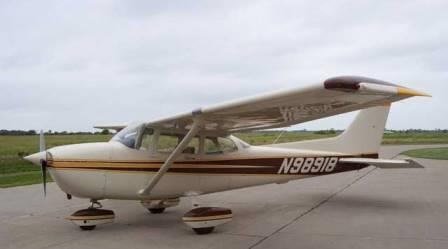
Cessna 172 or 177


Posted in aircraft, aircraft ownership, Airventure, Aviation, EAA | Tags: aircraft, Aircraft insurance, aviation, aviation insurance, Cessna |

Drones? Let’s talk drone insurance.

Posted on December 20, 2017 by Scott Smith

Let’s talk drones.

Drones, now that you have one what do you do with it? There are only so many videos of your yard or your roof you can take. So you start taking videos for other people, making money by making videos.

Being Paid.  Good idea, but if you are being paid to fly your drone you will be considered commercial by the FAA and the insurance underwriters.

No liability coverage. That means the liability that is included with your home owners insurance or any liability coverage you may have as a member of the Academy of Model Aeronautics will not cover your commercial flying.

That’s where we come in.  We have been specializing in the aviation insurance business for over 30 years.

Aviation Insurance Companies. And many of the aviation insurance underwriters are providing coverage for the drone industry (and have been for a number of years).

The basics of drone insurance.

Most important coverage you will need is the liability coverage for property damage and bodily injury.

What is liability? If you cause an accident, or have an accident that damages a third parties property or injures someone, liability is the coverage you will need.

Why do you need it? Often a company that hires you will require you to have liability insurance.

Premiums

Premium averages around $700 for 1 million dollar policy for property damage and/or bodily injury. Lower and higher liability limits are available.

Drone hull coverage. If you need the drone itself insured, I would call that drone hull coverage. As a guideline, drone hull coverage rates average 5% of the equipment’s value with 5% deductibles.

Example – a $3,000 hull value for the drone and camera would be about $150 in premium (plus the liability of $700) for a total annual premium of $850.

Should you buy hull coverage? Whether you buy hull coverage kind of depends on the value of your equipment and what you are willing to risk.  Many opt for the liability only option.

Premiums are average and can change based on the pilots experience, type of drone and how it is used.

Do you need a 333 No you don’t need the 333 Exemption, Part 107 or a pilot license to buy insurance. Although each company has different requirements and those requirements could include additional training, naming a licensed pilot (107 or other), copy of your 333 filing, etc.

Check out my YouTube video here.

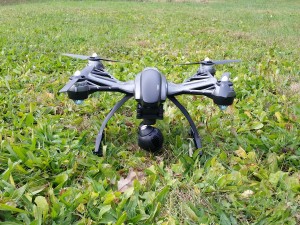
drones

Posted in drone insurance, drones | Tags: Aircraft insurance, ama, aviation insurance, drones, model aircraft |

AMATEUR-BUILT AIRCRAFT ACCIDENT TOTALS DROP TO HISTORIC LOWS

Posted on November 17, 2017 by Scott Smith

eaa


FOR IMMEDIATE RELEASE

AMATEUR-BUILT AIRCRAFT ACCIDENT TOTALS DROP TO HISTORIC LOWS

EAA safety efforts contribute to steady decline while flight hours increase

EAA AVIATION CENTER, OSHKOSH, Wisconsin — (November 16, 2017) — Fatal accidents in experimental category aircraft, particularly amateur-built aircraft, continued their decline during the Federal Aviation Administration’s 2017 fiscal year that ended September 30, falling to historic lows.

For the 12-month period from October 1, 2016, to September 30, 2017, fatal accident totals in amateur-built aircraft were down 18 percent to just 27, compared with 33 during the 2016 fiscal year. That continues a four-year trend that has seen a total drop of 47 percent in fatal accidents, despite an increasing amount of flight hours each year over that period. The specific totals compare to 40 amateur-built aircraft fatal accidents during the 2015 fiscal year and 51 in the 2014 fiscal year.

In addition, fatal accident totals for the experimental category overall, including racing aircraft, those used for exhibit only, research-and-development, and some types of light-sport aircraft, dropped as well. Total fatal accidents fell from 49 to 45 during the 12-month measurement period ending September 30, 2017. The final figures are nearly 25 percent below the FAA’s “not-to-exceed” goal of 59 fatal accidents for that period.

“These are historic lows for fatal accident in amateur-built aircraft and this continuing trend is a credit to everyone who is focusing on safety,” said Sean Elliott, vice president of Advocacy and Safety for the Experimental Aircraft Association (EAA), who highlighted these figures at the FAA General Aviation Safety Summit in late October. “The overall fatal accident numbers remain much lower than other recreational pursuits, such as paddle sports, skiing and snowboarding, and driving all-terrain vehicles. Statistics even show that being involved in a fatal amateur-built aircraft accident is less likely than being killed in a lightning strike incident.”

EAA has worked closely with the FAA and the National Transportation Safety Board on recommendations to reduce fatal accidents, including through participation in the FAA General Aviation Joint Steering Committee that EAA co-chairs. The EAA focus has also included the Founder’s Innovation Prize competition that seeks innovations to reduce loss-of-control accidents in amateur-built aircraft; a focus on transition and recurrent training; and use of an additional safety pilot during initial flight testing in amateur-built aircraft.

“These efforts build upon EAA’s longstanding Technical Counselor and Flight Advisor programs, and additional safety materials available through EAA’s flagship Sport Aviation magazine,” Elliott said. “Further reducing the accident totals is a continuing challenge, but one that is foremost as part of EAA’s mission to grow participation in aviation.”

About EAA

EAA embodies the spirit of aviation through the world’s most engaged community of aviation enthusiasts. EAA’s 200,000 members and 1,000 local chapters enjoy the fun and camaraderie of sharing their passion for flying, building and restoring recreational aircraft. For more information on EAA and its programs, call 800-JOIN-EAA (800-564-6322) or go to www.eaa.org. For continual news updates, connect with www.twitter.com/EAA.

EAA-2017-45, For more information, contact: Dick Knapinski, EAA Communications, (920) 426-6523  dknapinski@eaa.org


Posted in aircraft, aircraft insurance, Airventure, Aviation, EAA | Tags: aircraft, Aircraft insurance, airshows, Airventure, AMATEUR-BUILT AIRCRAFT, EAA, experimental aircraft, FAA, homebuilt, kitplanes |
« Previous Page
Next Page »

Contact us

Call – (515) 289-1439

Email: ins@skysmith.com


Wings, Wheels, Water YouTube Channel

subscribeSubscribe to my channel
«
Prev
1
/
7
Next
»
loading
play
Touch 'N Go - Liability
play
Touch 'N Go - Floats
play
Touch 'N Go - Cost (of Aircraft Ownership)
«
Prev
1
/
7
Next
»
loading

CyberChimps WordPress Themes

© Scott Sky Smith