
• Online Account Log-In
  • Scott Sky Smith Blog – Sky Log
  • Privacy Policy
Scott Sky Smith Insurance

Tag Archives: airports

National Air and Space Museum Renovation Update

Posted on August 20, 2019 by Scott Smith

Contractors work on installing motorized scaffolding on the Northwest corner of the Smithsonian Air and Space Museum in Washington, DC, July 31, 2019. (Smithsonian photo by Jim Preston)

National Air and Space Museum Renovation Update

Museum Remains Open During Construction

The Smithsonian’s National Air and Space Museum’s renovation of the building on the National Mall continues with artifact moves and significant changes to the “Boeing Milestones of Flight Hall.” The North American X-15 will be the first major artifact to be lowered and removed from the museum’s main hall. Visitors will continue to see changes as other artifacts shift and move over the next few months. These adjustments will prepare the space for the construction of a large wall to divide and close the Independence Avenue side of the Hall, the Barron Hilton Pioneers of Flight Gallery and the Albert Einstein Planetarium. Work to construct the floor-to-ceiling wall will begin Oct. 7, at which time the museum’s Independence Avenue entrance will close for approximately two years. The entrance on the National Mall side (Jefferson Drive) will remain open for visitors.

This week, the X-15 (which holds the record for top speed by a crewed aircraft) and the Douglas D-558-2 Skyrocket will be relocated to the museum’s storage facilities near Dulles Airport.

Construction on the museum’s exterior continues to progress now that artifacts have been removed from the west wing (near 7th Street). The ceremonial first stone will be removed from the exterior Aug. 21. Scaffolding on the exterior of the museum’s west end will allow for the removal and replacement of the stones and the window walls.

Posted in aircraft, airplanes, airshow, airshows, Airventure, FAA, NASA, NASM, National Air and Space, space shuttle, space travel, spacecraft | Tags: aircraft, airplanes, airports, airshows, Airventure, EAA, FAA |

TEXT MESSAGE SYSTEM ADDS INFORMATION TO EAA AIRVENTURE OSHKOSH NOTAM ARRIVAL

Posted on June 28, 2019 by Scott Smith

FOR IMMEDIATE RELEASE

NEW TEXT MESSAGE SYSTEM ADDS INFORMATION TO EAA AIRVENTURE OSHKOSH NOTAM ARRIVAL PROCEDURE

Text OSHARRIVAL to 64600 to receive arrival status updates

EAA AVIATION CENTER, OSHKOSH, Wisconsin — (June 28, 2019) — A new text message system will add further information for pilots as they prepare their arrivals at EAA AirVenture Oshkosh 2019, using the FAA Notice to Airmen (NOTAM) procedures. The text message availability is one of several enhancements to the NOTAM process for AirVenture, the 67th annual Experimental Aircraft Association fly-in convention on July 22-28 at Wittman Regional Airport in Oshkosh.

By texting OSHARRIVAL to 64600, pilots can receive the latest status updates for AirVenture arrivals and plan accordingly, whether that means continuing to Oshkosh or perhaps temporarily stopping at an outlying airport if traffic levels are very high.

“We used pilot feedback to create recommendations to the FAA for enhancing the NOTAM and arrival processes,” said Sean Elliott, EAA’s vice president of advocacy and safety. “It is every pilot’s responsibility to read and understand the current Oshkosh NOTAM before they fly to AirVenture, but the text message system adds a level of up-to-the-minute complementary information that was not available previously.”

The NOTAM, which is in effect from 6 a.m. CDT on Friday, July 19, until noon CDT on July 29, outlines procedures for the many types of aircraft that fly to Oshkosh for the event, as well as aircraft that land at nearby airports. The NOTAM was designed by the FAA to assist pilots in their EAA AirVenture flight planning. Some of the 2019 changes include:

  • New procedures for aircraft diversion to Fond du Lac (KFLD) in the event of airport closure at Wittman Regional Airport (KOSH)
  • Removal of restriction on transponder use
  • IFR routing changes

Other changes are part of the updated Oshkosh arrival “best practices,” such as procedures to limit the impact of VFR mass arrivals and ATC utilization of a ground stop/delay system out to 150 miles.

The new OSHARRIVAL text message system is in addition to two long-standing AirVenture text message systems: OSHALERT (AirVenture site weather and other updates) and OSHFUN (AirVenture feature and highlights). Each of the three text message systems can be obtained by texting the specific term to 64600.

About EAA AirVenture Oshkosh

EAA AirVenture Oshkosh is “The World’s Greatest Aviation Celebration” and EAA’s yearly membership convention. Additional EAA AirVenture information, including advance ticket and camping purchase, is available online at www.eaa.org/airventure. EAA members receive lowest prices on admission rates. For more information on EAA and its programs, call 800-JOIN-EAA (1-800-564-6322) or visit www.eaa.org. Immediate news is available at www.twitter.com/EAA.


EAA

Posted in aircraft, airshow, airshows, Airventure, EAA | Tags: aircraft, airports, airshows, Airventure, AMATEUR-BUILT AIRCRAFT, aviation, EAA, experimental aircraft, kitplanes, Sun N Fun |

FAA- New Changes to Recreational Drone Flying in the United States

Posted on May 23, 2019 by Scott Smith

Reprinted from the FAA website at – https://www.faa.gov/uas/recreational_fliers/

Recreational Flyers & Modeler Community-Based Organizations

You are considered a recreational user if you fly your drone for fun. It is important to know when and where you can fly and how to register your drone.

New Changes to Recreational Drone Flying in the United States

There’s a new law (PDF) that describes how, when, and where you can fly drones for recreational purposes. Following these rules will keep you and your drone safe and will help keep the airspace available to everyone.

Here’s what you need to do:

  1. Register your drone, mark it on the outside with the registration number (PDF), and carry proof of registration with you.
  2. Fly only for recreational purposes.
  3. Follow the safety guidelines of a community based organization.
  4. Fly your drone at or below 400 feet when in uncontrolled or “Class G” airspace. This is airspace where the FAA is not controlling manned air traffic. To determine what type of airspace you are in, refer to the mobile application that operates your drone (if so equipped) and/or use other drone-related mobile applications. Knowing your location and what airspace you’re in will also help you avoid interfering with other aircraft.
  5. Do NOT fly in controlled airspace (around and above many airports) unless:You are flying at a recreational flyer fixed site that has an agreement with the FAA. The FAA has posted a list of approved sites (MS Excel) and has depicted them as blue dots on a map. Each fixed site is limited to the altitude shown on this map, which varies by location.

    NOTE: Flight in controlled airspace is temporarily limited to these fixed fields. The FAA is upgrading the online system, known as LAANC (the Low Altitude Authorization and Notification Capability), so that recreational operations can get automated airspace authorizations to fly in controlled airspace. This system is currently only available for certified Part 107 drone pilots.

    NOTE: If your organization is interested in establishing a letter of agreement for a fixed flying site, please contact us at ajt-9-uas-integration@faa.gov.

  6. Keep your drone within your line of sight, or within the visual line-of-sight of a visual observer who is co-located and in direct communication with you.
  7. Do NOT fly in airspace where flight is prohibited. Airspace restrictions can be found on our interactive map, and temporary flight restrictions can be found here. Drone operators are responsible for ensuring they comply with all airspace restrictions.
  8. Never fly near other aircraft, especially near airports.
  9. Never fly over groups of people, public events, or stadiums full of people.
  10. Never fly near emergencies such as any type of accident response, law enforcement activities, firefighting, or hurricane recovery efforts.
  11. Never fly under the influence of drugs or alcohol.

Recreational flyers should know that if they intentionally violate any of these safety requirements, and/or operate in a careless and reckless manner, they could be liable for criminal and/or civil penalties.

Read the Authorization for limited recreational operations as described in section 44809 (PDF). All limited recreational operations should be conducted in accordance with this authorization.

Changes Coming in the Future

The FAA is upgrading the online system, known as LAANC (the Low Altitude Authorization and Notification Capability), so that recreational operations can get automated airspace authorizations to fly in controlled airspace.

The new law also requires:

  1. Drone operators to pass an online aeronautical knowledge and safety test and carry proof of test passage.
  2. The FAA to issue guidance for how it will recognize community based organizations.

The FAA plans to have all of these features and requirements fully implemented by the summer of 2019.

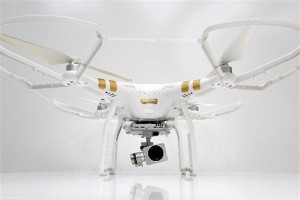
Recreational Drone

Posted in aircraft, airshow, Aviation, Drone, drones, FAA, FAA registration | Tags: aircraft, airports, AMATEUR-BUILT AIRCRAFT, drone insurance, drones, experimental aircraft, FAA, model aircraft, Sun N Fun |
« Previous Page
Next Page »

Contact us

Call – (515) 289-1439

Email: ins@skysmith.com


Wings, Wheels, Water YouTube Channel

subscribeSubscribe to my channel
«
Prev
1
/
7
Next
»
loading
play
Touch 'N Go - Liability
play
Touch 'N Go - Floats
play
Touch 'N Go - Cost (of Aircraft Ownership)
«
Prev
1
/
7
Next
»
loading

CyberChimps WordPress Themes

© Scott Sky Smith