• Online Account Log-In
  • Scott Sky Smith Blog – Sky Log
  • Privacy Policy
Scott Sky Smith Insurance

Tag Archives: FAA

F-22 Raptor Demonstration Team

Posted on February 26, 2021 by Scott Smith

F-22 Raptor Demonstration Team

For Immediate Release
February 26th, 2021

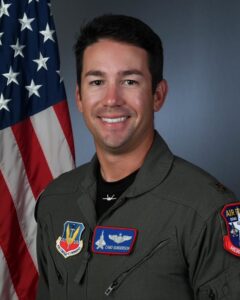
Lakeland, Florida: The 2021 SUN ‘n FUN Aerospace Expo is excited to welcome home U.S. Air Force Major Joshua “Cabo” Gunderson as he joins an exclusive airshow lineup as the F-22 Raptor Demonstration Team pilot and commander.

F-22 Raptor Demonstration Team

Graduating from Bloomingdale High School in Valrico in 2004, Gunderson received an appointment to the U.S. Air Force Academy at age 17 and graduated in 2008. He dreamed of being in the seat of a fighter jet after seeing them perform at SUN ‘n FUN and other airshows he attended near his Central Florida hometown.

Gunderson is looking forward to the homecoming and said, “I am extremely excited about returning to my home state of Florida and flying at SUN ‘n FUN. I attended many SUN ‘n FUN events as a kid and loved seeing the military jets, so it’s an honor to pay that forward to future aviators.”

F-22 Raptor Demonstration Team
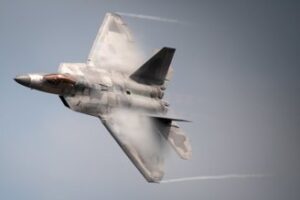
The F22 Raptor provides the USAF with a lethal combination of stealth, maneuverability, weaponry, and surveillance capabilities that make it unmatched by any other fighter, current or projected.

“We are very pleased to welcome Cabo and his team to Lakeland,” said Greg Gibson, Airshow Director and CMO for SUN ‘n FUN. “The Raptor is one of my personal favorites. The incredible maneuverability and its ability to demonstrate such agility and power while literally disappearing from the enemy in combat is truly amazing. I hope everyone will come join us to see what I mean when they see it perform in person!”

The F22 Raptor Demonstration Team is based at Joint Base Langley-Eustis in Hampton, VA, and consists of 19 elite members that includes the pilot, safety officer, superintendent, team chief, multiple crew chiefs, avionics specialists, public affairs and aircrew flight equipment technicians. Together, the team visits local schools, hospitals, and participates
in various community events in addition to performing aerial demonstrations. The team is responsible for representing Air Combat Command, the United States Air Force, the Department of Defense, and the United States of America at more than 20 air shows annually.

Fans can see “Cabo” put the Raptor though its incredible demonstration profile April 16, 17, and 18 at SUN ‘n FUN, and he will perform in two presentations with the aircraft daily. First, he will give an incredible high-performance display of jaw-dropping speed, precision and maneuverability, followed by the patriotic Heritage Flight, where the Raptor will be joined by a vintage P-51 Mustang in a moving formation tribute flight to honor our nation’s aviation heroes from all eras. SUN n’ FUN is honored to welcome Maj. Gunderson home to celebrate the past, present, and future of aviation.

The SUN ‘n FUN Aerospace Expo is April 13th-18th. Come join the excitement and watch in awe as Maj. Gunderson joins the U.S. Navy Blue Angels and dozens of other performers in daily airshows, as well as hundreds of aircraft displays and outdoor exhibits in this historic return of one of the Bay Area’s mainstays in family entertainment.

Posted in aircraft, airshows, Airventure, Aviation, EAA, SUN ‘n FUN, sun and fun, sun n fun | Tags: aircraft, airplanes, airshows, aviation, EAA, experimental aircraft, FAA, Sun N Fun, sunnfun, warbirds |

FAA Issues – Drone Rules

Posted on December 30, 2020 by Scott Smith

Press Release – U.S. Department of Transportation Issues Two Much-Anticipated Drone Rules to Advance Safety and Innovation in the United States

For Immediate Release

December 28, 2020
Contact: pressoffice@faa.gov


WASHINGTON — The U.S. Department of Transportation’s Federal Aviation Administration (FAA) today announced final Drone Rules for Unmanned Aircraft (UA), commonly known as drones. The new rules will require Remote Identification (Remote ID) of drones and allow operators of small drones to fly over people and at night under certain conditions. These rules come at a time when drones represent the fastest-growing segment in the entire transportation sector – with currently over 1.7 million drone registrations and 203,000 FAA-certificated remote pilots.

Remote ID will help mitigate risks associated with expanded drone operations, such as flights over people and at night, and both rules support technological and operational innovation and advancements.

“These final rules carefully address safety, security and privacy concerns while advancing opportunities for innovation and utilization of drone technology,” said U.S. Secretary of Transportation Elaine L. Chao.

Remote ID (PDF) is a major step toward the full integration of drones into the national airspace system. Remote ID provides identification of drones in flight as well as the location of their control stations, providing crucial information to our national security agencies and law enforcement partners, and other officials charged with ensuring public safety. Airspace awareness reduces the risk of drone interference with other aircraft and people and property on the ground.

Equipping drones with Remote ID technology builds on previous steps taken by the FAA and the drone industry to integrate operations safely into the national airspace system. Part 107 of the federal aviation regulations currently prohibits covered drone operations over people and at night unless the operator obtains a waiver from the FAA. The new FAA regulations jointly provide increased flexibility to conduct certain small UAS without obtaining waiver.

“The new rules make way for the further integration of drones into our airspace by addressing safety and security concerns,” said FAA Administrator Steve Dickson. “They get us closer to the day when we will more routinely see drone operations such as the delivery of packages.”

The Remote ID rule (PDF) applies to all operators of drones that require FAA registration. There are three ways to comply with the operational requirements:

1. Operate a standard Remote ID drone that broadcasts identification and location information of the drone and control station;

2. Operate a drone with a Remote ID broadcast module (may be a separate device attached to the drone), which broadcasts identification, location, and take-off information; or

3. Operate a drone without Remote ID but at specific FAA-recognized identification areas.

The Operations Over People and at Night rule (PDF) applies to Part 107 operators. The ability to fly over people and moving vehicles varies depending on the level of risk a small drone operation presents to people on the ground. Operations are permitted based on four categories, which can be found in the executive summary (PDF) accompanying the rule. Additionally, this rule allows for operations at night under certain conditions.

The final rule requires that small drone operators have their remote pilot certificate and identification in their physical possession when operating, ready to present to authorities if needed. This rule also expands the class of authorities who may request these forms from a remote pilot. The final rule replaces the requirement to complete a recurrent test every 24 calendar months with the requirement to complete updated recurrent training that includes operating at night in identified subject areas.

Both rules will become effective 60 days after publication in the Federal Register. The Remote ID rule includes two compliance dates. Drone manufacturers will have 18 months to begin producing drones with Remote ID, with operators having an additional year to start using drones with Remote ID.

For general inquiries on these new regulations and other UAS inquiries, please call 844-FLY-MY-UA or email the FAA.

Posted in aircraft, airshow, Airventure, AMA, AOPA, Drone, drone inspection, drone insurance, drones, EAA, FAA, FAR | Tags: aircraft, Aircraft insurance, Airventure, drone insurance, drones, EAA, FAA, model aircraft, NBAA, Sun N Fun, sunnfun |

AMATEUR-BUILT FATAL ACCIDENT TOTAL DROPS AGAIN

Posted on November 17, 2020 by Scott Smith

EXPERIMENTAL, AMATEUR-BUILT FATAL ACCIDENT TOTAL DROPS AGAIN, BELOW FAA NOT-TO-EXCEED GOAL

Fatal accident – Continues decade-long improvement in safety

EAA AVIATION CENTER, OSHKOSH, Wisconsin — (November 17, 2020) — Safety totals for experimental amateur-built aircraft continued the decade-long improvement trend in 2020, as fatal accident totals finished below the Federal Aviation Administration not-to-exceed number for the 12 months ending September 30, 2020.

Over the 12-month period from October 1, 2019, through September 30, 2020, which mirrors that federal government fiscal year, total fatal accidents in experimental aircraft dropped more than 15 percent from the previous year, to 44 total fatal accidents including 32 in amateur-built aircraft – an 18 percent drop. The 44 fatal accidents were eight percent below the FAA’s not-to-exceed number of 48 for Fiscal Year 2020.

“This is outstanding news as far as the continuing trend of lower accident totals in experimental category and amateur-built aircraft, especially as total flight hours increased over the past 12 months,” said Sean Elliott, EAA’s vice president of advocacy and safety. “The FAA continues to challenge our community by lowering the not-to-exceed number each year and we have met that challenge over the past decade, as we have seen fatal accident totals drop by nearly 40 percent for both experimental and amateur-built aircraft over the past decade.”

As a comparison, experimental category fatal accidents totaled 73 for the yearlong period ending on September 30, 2011, with 51 of those in amateur-built aircraft. Along with the amateur-built subcategory, the FAA’s experimental category includes other aircraft groups such as experimental/exhibition, experimental/light-sport aircraft, and research-and-development aircraft, among others.

The drop in experimental category accidents mirrors and, in some cases, exceeds the decline in overall general aviation fatal accidents over the past decade. Elliott noted that the overall fatal accident numbers for experimental category aircraft remain much lower than other recreational pursuits, such as boating and driving all-terrain vehicles.

EAA has worked closely with the FAA and NTSB on recommendations to reduce fatal accidents, including through participation in the FAA General Aviation Joint Steering Committee. Efforts have also included thousands of copies of the EAA Flight Test Manual now in the hands of amateur-built aircraft owners and the increasing use of an additional safety pilot during initial flight testing in amateur-built aircraft. Other safety initiatives ranging from regular safety webinars and the annual Founders Innovations Prize have also put the spotlight on safety for experimental category aircraft.

“While we are seeing already very small numbers, the continual emphasis on safety for all of us can never be overstated,” Elliott said. “This is a trend that must continue as we pursue ever-higher levels of safety. We must focus on training, safety enhancements, and good pilot skills to complement the ever-improving technology in today’s aircraft cockpits.”

Posted in aircraft, aircraft ownership, airshow, airshows, Airventure, EAA, Uncategorized | Tags: aircraft, Aircraft insurance, airplanes, Airventure, AMATEUR-BUILT AIRCRAFT, aviation, aviation insurance, EAA, experimental aircraft, FAA, homebuilt, kitplanes, sunnfun |
« Previous Page
Next Page »

Contact us

Call – (515) 289-1439

Email: ins@skysmith.com


Wings, Wheels, Water YouTube Channel

subscribeSubscribe to my channel
«
Prev
1
/
7
Next
»
loading
play
Touch 'N Go - Liability
play
Touch 'N Go - Floats
play
Touch 'N Go - Cost (of Aircraft Ownership)
«
Prev
1
/
7
Next
»
loading

CyberChimps WordPress Themes

© Scott Sky Smith